
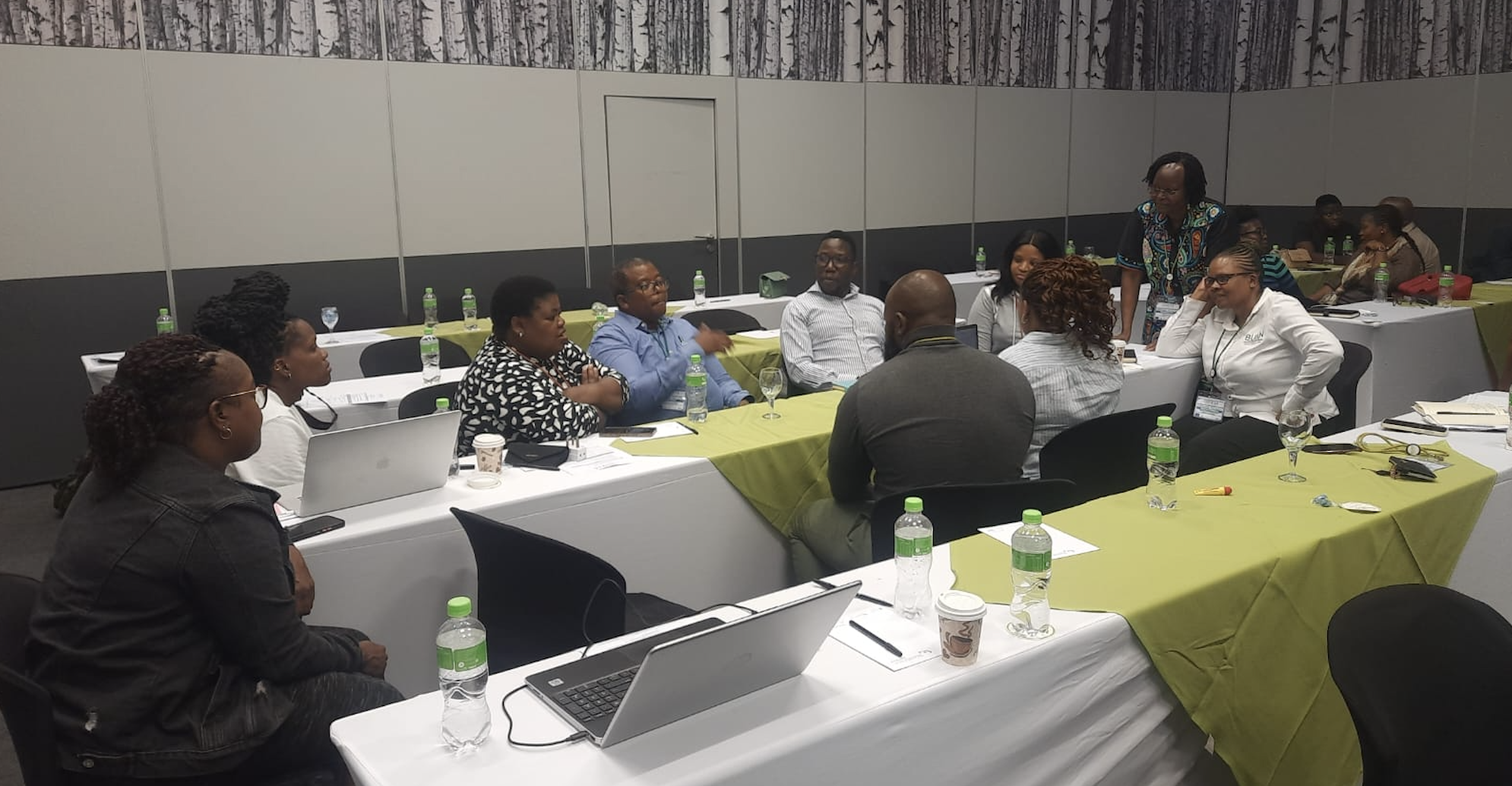

Attended by journalists and presenters from print, television and radio networks in Botswana, experts in One Health from key line ministries, and academia, the science café – held on on 19th April – sought to establish a lasting connection between scientists and journalists.
While setting the agenda, Bibiana Iraki, Senior Program Officer at ISAAA AfriCenter and member of the Capacitating One Health in Eastern and Southern Africa (COHESA) project team spoke of the existing disconnect between the media and scientists, with the former focused on ‘breaking news’- which needs speedy reporting- while scientists focus on a rigorous process to determine facts, which is bound to be slower.
“Therefore, scientists normally take a long time to review their methodologies while the media aim to share topical information that attracts a public audience,” she said.
Ms Iraki noted that through regular and intentional interactions to understand each profession’s landscape, the relationship between the two professions can be improved.
One Health experts were called upon to craft a working relationship with the mass media and social media influencers in order to increase public awareness and embed the One Health concept in society. Scientists, it was noted, are often not familiar with how the media operates, and journalists at times feel that scientists have “an ivory-tower mentality” and may have other vested interests when it comes to communicating their research outputs through media.
Additionally, many news organizations are under intense financial pressure and therefore have to reduce output on specialist reporting, it was noted. Unfortunately, more often than not, scientific content is regarded as expendable because it is believed that other types of news are more popular with audiences and consequently advertisers.
The experts were encouraged to use social media, as a platform that could bridge gaps that conventional science journalism has struggled to address by enhancing the output of science stories.
“However, these platforms are not well regulated and have been used to spread mis/disinformation. Additionally, social media platforms do not reach the same broad audience that serves the mass media and may further exclude marginalized communities that have no access to featured phones or internet connectivity. Consequently, traditional and social media must be used together to increase coverage of One Health stories, enhance public awareness and embed the One Health concept across society,” the stakeholders agreed unanimously at the end of the café.
It was agreed that some of the methods through which the media would get the gospel of One Health across more efficiently was through having specialized columns for science stories on topical issues to maintain relevance and recency, building or developing a science communications unit that helps in the dissemination of information, and having a pool of experts that journalists can reach out to for interviews, especially when meeting deadlines.
Journalists were also tasked with making scientists understand the expectation from the media houses, while it was agreed that it is necessary to have incentive training, or seminars, where certificates are given to journalists.