

Africa’s food system is approaching an important crossroads. Population growth, climate change, global disruptions, urbanization, changing diets and increasing pressure on natural resources are changing both how we produce food and how much food we will need in the decades ahead.
Africa’s food demand is projected to increase substantially by 2050, with estimates commonly pointing to an increase of around 50 percent. Meeting this demand will require more than simply producing more food. It will require more productive and resilient agriculture, stronger regional markets, investment in science and innovation, and institutions capable of supporting these changes.
This raises a bigger question: Are we building the systems today that will enable Africa to feed itself sustainably tomorrow?
Innovation will be part of the answer
Agricultural innovation has always been central to increasing food production. Today, the range of available tools is expanding rapidly – from improved conventional breeding and modern biotechnology to gene editing, digital agriculture and artificial intelligence.
Biotechnology is already becoming part of Africa’s agricultural landscape. Currently, 10 African countries have approved biotech crops for cultivation, involving crops such as maize, cotton, cowpea, cassava, potato and soybean. Six of these countries are within the Common Market for Eastern and Southern Africa (COMESA) region, making biotechnology not only a national issue but increasingly a regional one.
These technologies offer opportunities to address some very practical African agricultural challenges: drought, pests and diseases, crop losses, poor productivity and nutritional deficiencies. But technology alone will not transform African agriculture.
Innovation must be accompanied by strong scientific institutions capable of determining whether new products are safe, appropriate and beneficial. This is why science-based regulation should be seen as part of the infrastructure that allows innovation to be used responsibly and confidently.
Why regional cooperation matters
Food does not stop at national borders. Maize produced in one country may be consumed in another. Grain and soybean may move as animal feed. Seed, processed foods and humanitarian food assistance also move across borders.
This is particularly important in COMESA, where Member States are at different stages of developing their national biosafety regulatory systems and technical capacity. Not every country has the specialist expertise or institutional capacity needed to independently assess biotechnology applications.
This also has important implications for trade. A biotech product approved in one country may subsequently move across borders as grain, animal feed, processed food or humanitarian food assistance. Regional scientific cooperation can help build confidence in regulatory decisions, reduce uncertainty and facilitate the safe movement of agricultural commodities between Member States.
A functioning regional food market therefore depends not only on roads, border posts and trade agreements. It also depends on trust in the standards, regulatory systems and scientific decisions behind the food and agricultural products being traded.
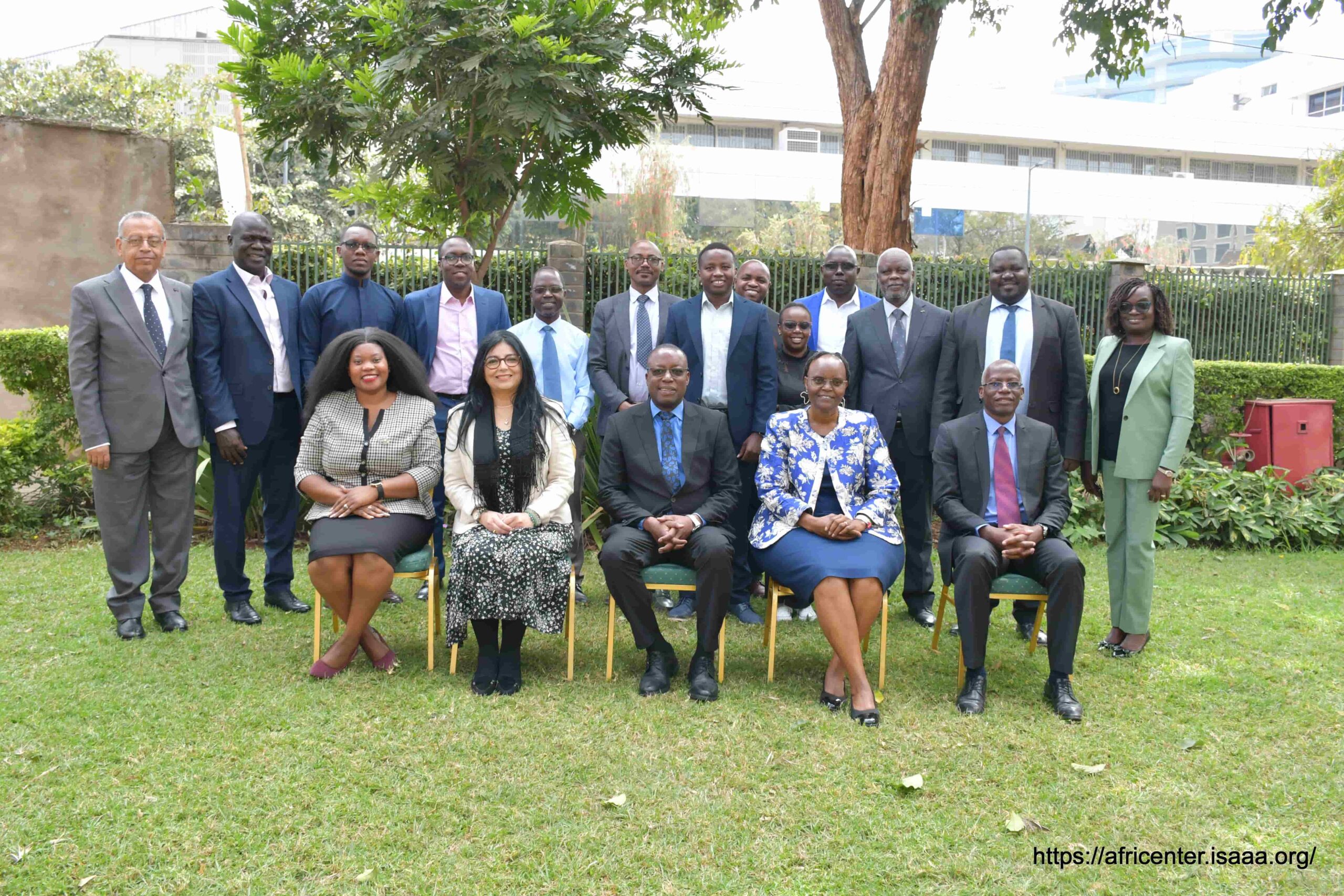
With this backdrop, the Alliance for Commodity Trade in Eastern and Southern Africa (ACTESA) and ISAAA AfriCenter co-hosted a COMESA Biosafety Panel of Experts induction workshop in Nairobi on 29 – 30 July 2026 to strengthen the Panel’s capacity to provide science-based advice on biotechnology and biosafety issues affecting the region.
The Panel provides an important regional scientific resource that can support Member States, particularly those with limited regulatory capacity, with independent technical assessment and advice. This can help countries make informed decisions while avoiding unnecessary duplication of highly specialized scientific assessments across the region.
Importantly, the workshop connected science with the practical realities of regional integration – covering biosafety assessment, national regulatory experiences, movement of GM commodities, food aid, imports and exports, use of scientific evidence across countries, and communication of regulatory decisions.
Looking beyond food security
These discussions also connect to a much bigger question about Africa’s food future. For decades, our attention has understandably focused on food security – ensuring that people have access to sufficient, safe and nutritious food.
As we look towards 2050, however, Africa should also be thinking about food sufficiency: building the long-term productive, scientific, technological and economic capacity to sustainably provide sufficient, nutritious, safe and affordable food for its growing population.
Food sufficiency does not mean that every African country must produce everything it consumes. Regional trade is part of food sufficiency. When one country experiences drought while another has surplus production, functioning regional markets should enable food to move efficiently from where it is available to where it is needed.
Achieving this will require more than farmers producing additional tons of food. It will require investment in research, technology, food safety, infrastructure, processing, private enterprise, young people, functioning markets and regional cooperation.
A personal privilege and a broader responsibility
I am grateful to COMESA/ACTESA for nominating me to serve on the COMESA Biosafety Panel of Experts and for the opportunity to contribute to the induction training.
My contribution was to take fellow Panel members through the principles applied in the food and feed safety assessment of genetically modified products, while also considering how these principles can be applied to newer technologies such as gene editing.
The experience reinforced something much broader for me. Africa’s ability to feed itself in the decades ahead will depend not only on how much food we produce, but also on the quality of our science, the strength of our institutions, our willingness to innovate, and our ability to trade and cooperate across borders.
If food sufficiency by 2050 is the destination, then science, innovation and regional trade must all be part of the journey.
Dr. Allan Liavoga is a food safety expert and a member of the COMESA Biosafety Panel of Experts.